Run PSLE Oral Mock Exams at Home Easily
PSLE Oral, Singapore Parents, Home Practice
How to Run a PSLE Oral Mock Exam at Home: Step-by-Step Parent Guide
By Hakim Harsono, Speak Easy — a practical system any Singapore parent can use to run a PSLE oral mock exam at home with impact, not guesswork.
Why Home Mock Exams Matter More Than “Just Read This”
Most schools run only two to four PSLE oral practice sessions a year. That is not enough for many P6 students, especially those who freeze up, speak too softly, or give very short answers. Home practice can bridge this gap — but only if it is structured.
Unstructured practice sounds like this: “Just read this passage for me” or “Tell me what you see in the picture”. The child reads, you correct a few words, everyone feels busy, but there is little real improvement. This is not a true PSLE oral mock exam at home Singapore parents can rely on; it is more like casual reading time.
A structured home mock exam copies the exam format: fixed timing, clear roles, and a short debrief. When done properly, one focused session each week can do more for your child than random daily drilling. The guide below shows exactly how to practise PSLE oral at home in a way that feels real, but still safe and encouraging.
What You Need Before You Start
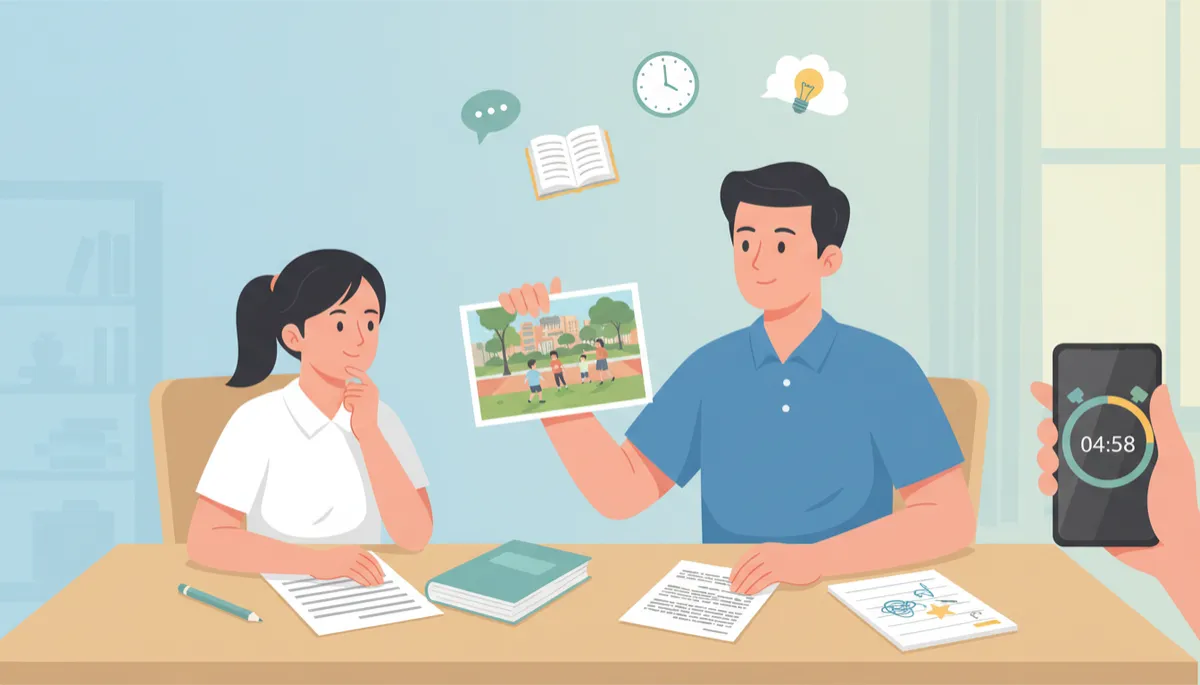
- One reading passage (P6 level): Use a PSLE oral practice book or print a short The Straits Times article that is suitable for children. One paragraph is enough if it is dense and slightly challenging.
- One photograph your child has not seen: Print a clear picture from a Singapore news article or a neutral stock photo site. Choose everyday local scenes — hawker centres, playgrounds, MRT, school events — similar to PSLE SBC photos.
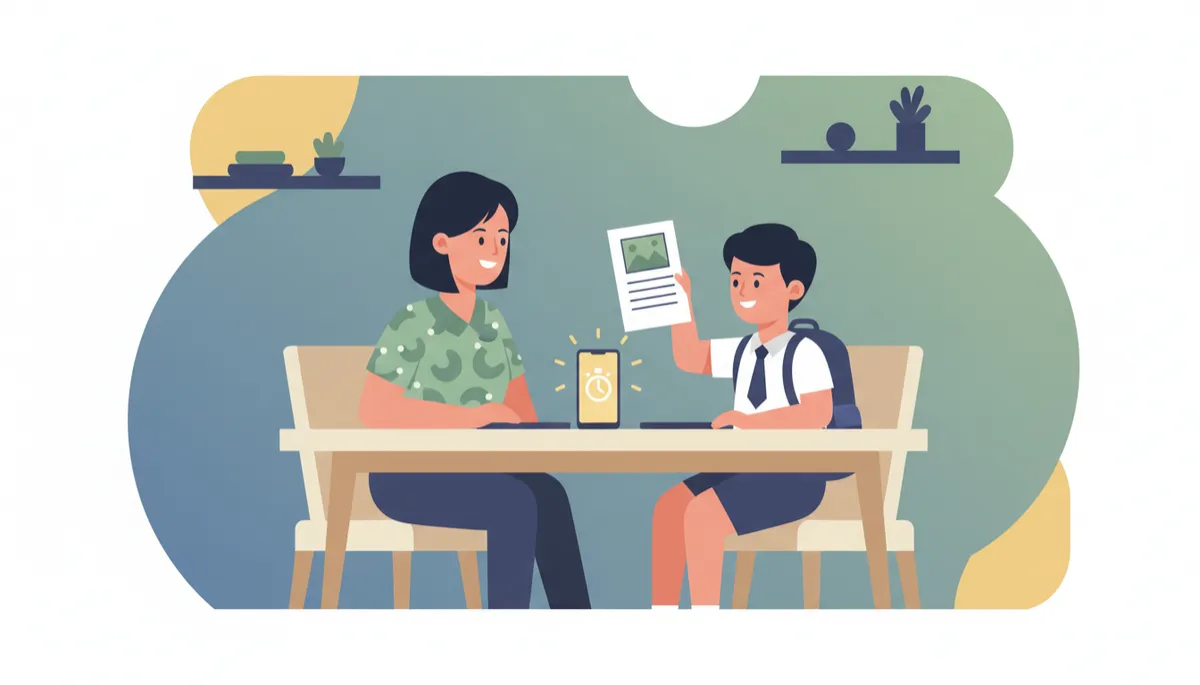
- Neutral sitting arrangement: Sit your child across from you at a table, not beside you. This copies the exam room and helps them get used to speaking to an adult in front of them, not a parent next to them.
- A phone for timing and optional recording: Use the timer for each step. If your child is comfortable, record audio so they can hear their speed, clarity, and tone later.
Step 1: Silent Prep Window – 5 Minutes Exactly
In the real exam, students get a short silent preparation time. Recreate this at home so your PSLE oral mock exam at home Singapore style feels authentic.
- Give your child both the passage and the photograph at the same time.
- Say, “You have 5 minutes of silent preparation. No talking. Use your strategies.”
- Start a 5-minute timer on your phone and place it where they can see it.
For the passage, remind them to use PACT quickly: P – Pause at punctuation, A – Attend to tricky words, C – Chunk phrases, T – Think about tone and meaning.
For the photograph, use 5W1H: Who, What, Where, When, Why, How. They should quietly scan the picture and ask themselves: Who is in the scene? What are they doing? Where and when might this be? Why is this happening? How do the people feel?
Step 2: Reading Aloud – 2–3 Minutes
When the 5 minutes are up, say, “You may begin reading.” Your child reads the passage aloud from start to end, aiming for 2–3 minutes.
- Sit across from your child with a neutral, calm expression. Do not mouth words or point at the passage.
- Do not interrupt, even if they mispronounce a word. Let them finish like in the real exam.
- On a small notepad, jot down only two things: one or two mispronounced words, and any part that sounded very flat or rushed.
Step 3: SBC Conversation – 8–10 Minutes
Next, move to the Stimulus-Based Conversation (SBC). This is where many students lose marks, so structured home PSLE oral practice Singapore parents run here is especially valuable.
- Remove the reading passage. Your child keeps only the photograph in front of them.
- Aim for 8–10 minutes of conversation. Use your phone timer again.
Ask three core questions, just like in school:
- Q1 – Description & inference: “What do you see in this picture?” and “What do you think is happening here?” Encourage them to talk for at least 40–60 seconds.
- Q2 – Personal experience: Link to their life. If the picture shows a school CCA fair, ask, “Have you ever taken part in a school event like this? Tell me about it.”
- Q3 – Opinion: Ask for a view related to the theme. For example, “Do you think schools should organise more events like this? Why or why not?”
After Q2 and Q3, always ask one genuine follow-up question based on your child’s answer, such as “Why do you feel that way?” or “Can you give me an example?”. This trains them to extend their responses naturally, a key scoring area in how to practise PSLE oral at home effectively.
Step 4: Debrief – 5 Minutes, Only Two Points
The debrief decides whether your child will look forward to the next PSLE oral mock exam at home, or avoid it. Keep it short and focused — one strength, one improvement.
- Start with a specific strength: “You spoke clearly and at a good speed during the conversation,” or “You described the people in the picture very well.”
- Give one specific improvement: “Next time, try to look up more often,” or “Let’s work on pronouncing ‘environment’ clearly.”
Do not list more than two things. A child who leaves the table feeling capable will practise again. A child who leaves feeling criticised will avoid both you and oral practice. Your goal is steady weekly progress, not perfection in one session.
How Often Should You Run Home PSLE Oral Practice?
You do not need to run a PSLE oral mock exam at home every day. If each session follows the steps above, once per week is enough for most P6 students. In the final four weeks before the exam, increase to twice per week to build confidence and fluency under exam-like conditions.
Next Step: Get Ready-Made Materials and Questions
If you want ready-made passages, photos, and model SBC questions tailored for home PSLE oral practice Singapore parents can use immediately, visit hakimharsono.com/start. You will find practical resources to support every step you have just read, so you can focus on encouraging your child, not guessing what to do.
