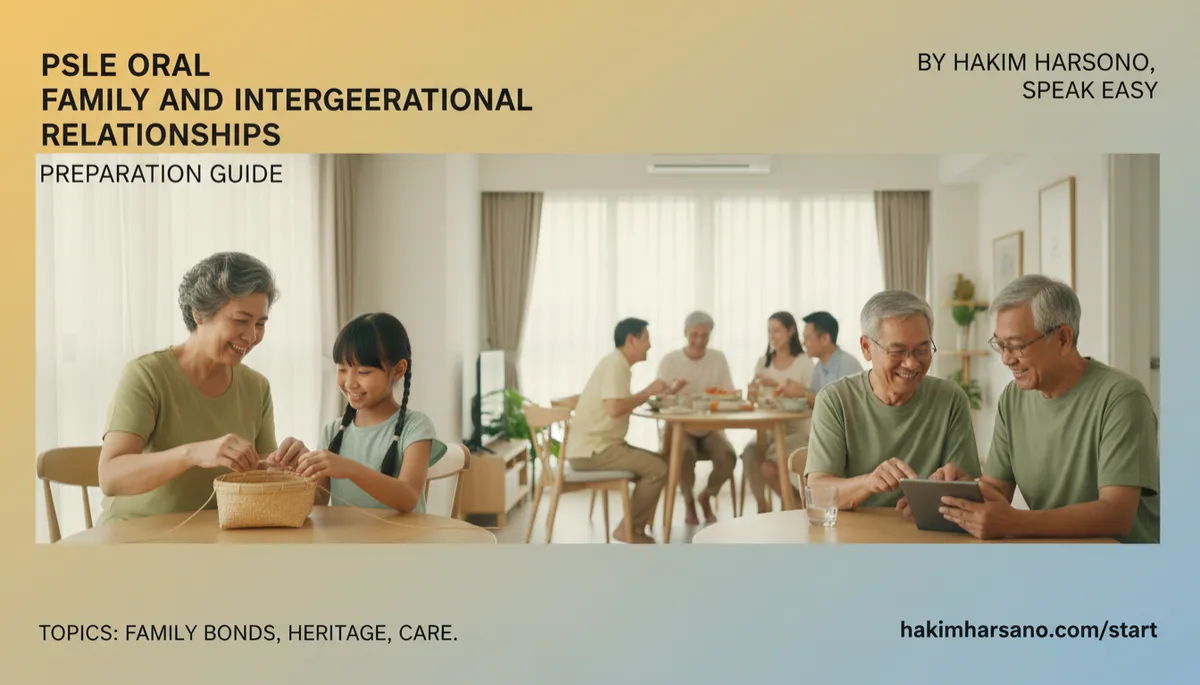
Guide to PSLE Oral: Family & Relationships
PSLE Oral, Family, Intergenerational Relationships Singapore
PSLE Oral Family and Intergenerational Relationships: Preparation Guide
By Hakim Harsono, Speak Easy — for Singapore parents who want their children to speak about family with warmth, clarity, and confidence during PSLE Oral.

Why the Family Topic Keeps Coming Back
If you look at recent exam trends, the PSLE oral family topic Singapore is almost a yearly guest. In the last 12 years, family-related themes have appeared in 7 papers. That is no accident. Intergenerational relationships, strong family bonds, and multigenerational households sit right at the heart of Singapore’s national values. MOE wants to hear how our children think about who raised them, who they care for, and what family means in a fast-changing society.
When your child can talk naturally about family, they are not just scoring for English; they are showing that they understand the kind of caring, intergenerational community Singapore is trying to build. That is why preparing for PSLE oral intergenerational relationships is one of the smartest moves you can make this year.
Likely Photograph Scenarios to Expect
For Picture Discussion, examiners love quiet, everyday scenes that reveal values. Common family and intergenerational pictures include:
- A grandparent teaching a grandchild a traditional skill — maybe rolling pineapple tarts, sewing, or showing them an old game from their own childhood. This invites vocabulary like heritage, tradition, and legacy.
- A multi-generational family meal, with several generations squeezed around a table. Here, children can talk about bonding, unconditional support, and the warmth of a multigenerational home.
- An elderly relative being cared for by younger family members — someone holding an arm, serving food, or reminding them about medicine. This is a natural gateway to caregiving and filial piety.
- A grandchild helping a grandparent with technology — setting up a phone, teaching them to video call, or showing photos. This shows a reciprocal relationship, where both generations teach and learn.
The Grandparent Story Advantage: Your Highest-ROI Preparation
One genuine, well-practised story about a grandparent is like a Swiss Army knife for PSLE oral family preparation. In a single story, your child can touch on family, intergenerational ties, community, culture, and even technology. For Q2 (personal experience), this is the single highest-ROI investment you can make together at home.
Spend one evening over dinner asking, “What is one memory with Ah Ma, Ah Gong, Popo, or Dada that you never want to forget?” Listen, then help your child shape it into a short, vivid story with feelings, actions, and a lesson learnt.
A Practical Vocabulary Bank (Used with Heart)
Instead of memorising long lists, choose a few strong words and anchor them to real memories. For example: intergenerational, heritage, tradition, legacy, reciprocal, unconditional, filial piety, bonding, caregiving, multigenerational.
Help your child create sentences from their own life: “Our multigenerational family dinners help us maintain our cultural heritage.” or “Caring for my grandfather taught me that filial piety is not just a duty, but an unconditional kind of love.”
Three Stories to Prepare Together
- A time you learned something important from a grandparent or older relative. Maybe Grandpa taught your child how to save money, or an auntie shared a story about hardship that shaped the family’s legacy.
- A time a generation gap created misunderstanding — and how it was resolved. Perhaps a strict rule about phone use led to conflict, but through talking, both sides understood each other better. This shows reciprocal respect.
- A time you helped an older family member with something hard for them. For example, teaching Grandma to use WhatsApp so she can see the great-grandchildren, or guiding an elderly uncle to the clinic. This naturally brings in caregiving and bonding.
Q3 Opinion: Should Adult Children Be Legally Required to Care for Ageing Parents?
This heavy-sounding question often appears in different forms to test your child’s values. Use the PEERS structure:
- P – Position: “I feel adult children should / should not be legally required…”
- E – Explanation: One clear reason, linked to responsibility, love, or fairness.
- E – Example (family story): A real situation from your own family, even a small one — maybe how your parents visit your grandparents weekly.
- R – Reflection: What does this show about Singapore’s care culture and filial piety?
- S – Summary: Re-state your position in one warm, confident sentence.
Take the Next Step with Speak Easy
When you guide your child to speak about family with sincerity, you are not just preparing for a PSLE oral family topic — you are preserving stories that might otherwise be lost. If you would like structured help, story frameworks, and model answers tailored to PSLE oral intergenerational relationships Singapore, start here: hakimharsono.com/start.
