Prepare for PSLE Oral 2027: Tech & AI Topics
PSLE Oral, Technology, AI, Singapore Parents
PSLE Oral 2027: Technology and AI as a Topic — How to Prepare
By Hakim Harsono, Speak Easy Singapore — a practical guide for parents who expect a PSLE oral technology topic 2027 and want structured, evidence-based preparation at home.

1. Why Technology Is the Most Overdue PSLE Oral Topic
From 2023 onwards, Singapore’s education narrative has been dominated by AI literacy, digital safety and blended learning. MOE’s EdTech Masterplan 2030 and SLS V2 emphasise students learning with and about AI, while Cyber Wellness now covers validating generative AI content and detecting deepfakes. Yet, technology has never been the primary PSLE Oral stimulus-based conversation (SBC) theme; it usually appears as a side angle under “values” or “family life”.
By 2027, all primary pupils will have grown up with SLS, school-based AI tools and national programmes like “Code for Fun”. SEAB typically aligns oral themes with curriculum emphases. Given how strongly digital literacy, AI use and online safety feature across MOE documents and school programmes, a PSLE oral technology topic 2027 is not a fringe guess; it is a high-probability, curriculum-aligned scenario parents should plan for deliberately.
2. Likely Photograph Scenarios for a Technology SBC
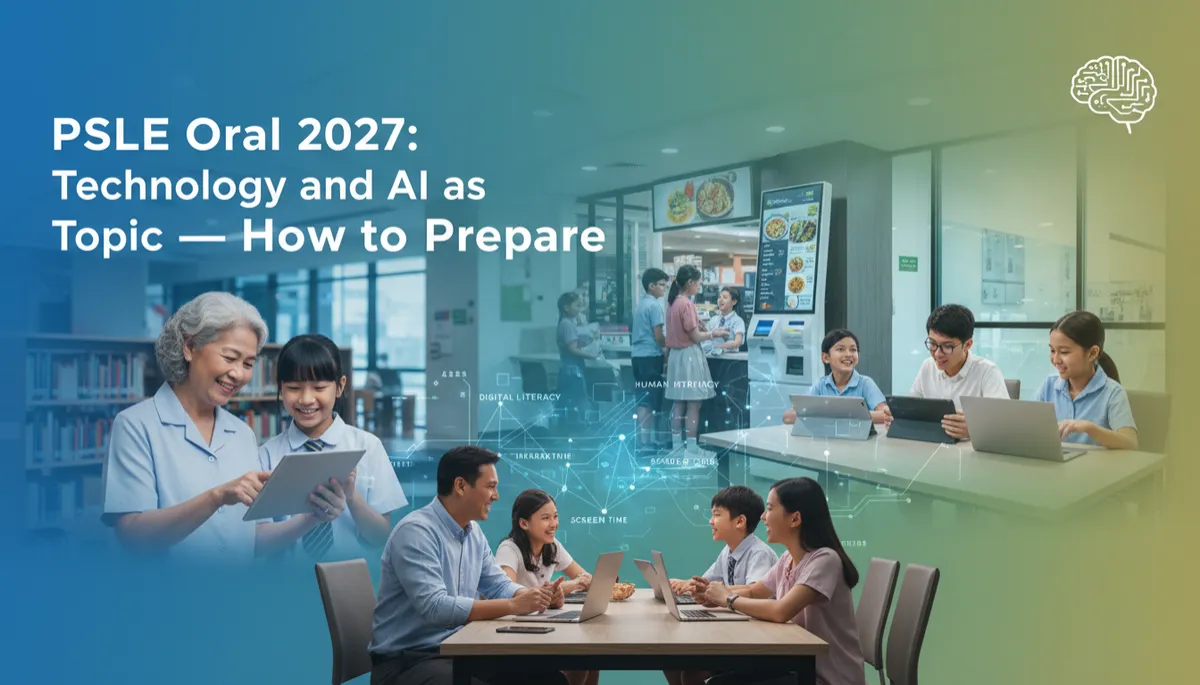
SEAB pictures are rarely futuristic. They are ordinary Singapore scenes with a clear tension. For a technology or PSLE oral AI topic Singapore parents can expect variations of:
- Elderly person learning to use a smartphone with help from a grandchild — combines intergenerational bonding, digital literacy and the digital divide.
- Children using devices in a library or community centre — raises questions about screen time, learning, and responsible use of online resources.
- Family at a dinner table with devices present — contrasts connectivity with reduced face-to-face human interaction.
- Automated queue system at a hawker centre or MRT — illustrates automation, convenience, and inclusion for less tech-savvy users.
3. Topic-Cluster Vocabulary to Pre-Load
Strong SBC answers use precise, thematic vocabulary. Build a mini “word bank” around the PSLE oral 2027 technology preparation theme:
- digital literacy — ability to use devices and online tools safely and effectively
- screen time — amount of time spent on digital devices daily
- connectivity — how technology keeps people linked through calls, chats and video
- human interaction — face-to-face conversations and shared activities
- automation — machines or apps doing tasks without much human effort
- algorithm — set of rules a computer follows to make decisions or show content
- information overload — feeling overwhelmed by too much online information
- digital divide — gap between people who can use technology well and those who cannot
vocab_bank = [
    "digital literacy",
    "screen time",
    "connectivity",
    "human interaction",
    "automation",
    "algorithm",
    "information overload",
    "digital divide",
]

for word in vocab_bank:
    print(f"My sentence with {word}: ...")
Treat this like a small “practice script”: your child rehearses one personal sentence per word.
4. Three PEEL Story Prompts to Practise at Home
Use PEEL (Point, Example, Explanation, Link) to keep answers structured and exam-friendly:
- A time technology helped you or your family unexpectedly. Point: technology can support family well-being. Example: a health app reminding grandparents to take medicine, or video calls during COVID. Explanation: show how connectivity and automation reduced worry. Link: connect to how pupils should use tech meaningfully, not just for games.
- A time you noticed someone struggling with technology. Example: an elderly neighbour confused by an automated queue system. Explanation: highlight the digital divide and importance of patience. Link: relate to the SBC picture of a grandchild helping a grandparent.
- Your view: has technology made Singapore families closer or more distant? Child chooses a side, then supports it with specific family routines: online shopping together, or everyone scrolling silently during meals. Encourage a balanced conclusion: “It depends how we manage our screen time.”
5. Preparing for Q3 Opinions Using PEERS
A likely Q3 statement is: “Technology is essential but must serve human connection, not replace it.” Use a PEERS frame (Point, Example, Explanation, Reason, Suggestion):
- Point: Agree that technology should support, not replace, relationships.
- Example: Family WhatsApp group strengthens connectivity when relatives work shifts.
- Explanation: Technology overcomes distance but cannot replace eye contact and body language.
- Reason: Too much screen time leads to less human interaction and possible information overload.
- Suggestion: Propose “device-free dinners” or time limits as practical boundaries.
6. What to Avoid in Technology-Themed Answers
Examiners are tired of generic lines like “technology is good but can be bad if overused”. For a PSLE oral AI topic preparation, steer your child away from:
- Vague claims with no personal evidence.
- Listing devices (“phone, tablet, laptop”) without describing behaviour or feelings.
- Extreme positions (“technology only harms families”) that ignore real benefits seen during home-based learning.
Next Steps for Parents
Treat technology as a daily conversation topic, not a last-minute theme. Build vocabulary, rehearse PEEL and PEERS structures, and connect school-based AI literacy lessons to home experiences. For a structured, Singapore-specific plan for PSLE oral 2027 technology preparation, visit hakimharsono.com/start and access targeted resources for parents and children.
