Master PSLE Oral Q1 with 5W1H Method
PSLE Oral, Photo Analysis, Singapore English
PSLE Oral Q1 Photo Analysis: The 5W1H Method Explained
By Hakim Harsono, Speak Easy — a step-by-step guide for Singapore parents and P6 students to tackle PSLE oral Q1 photo analysis with confidence.
1. What Exactly Is PSLE Oral Q1?
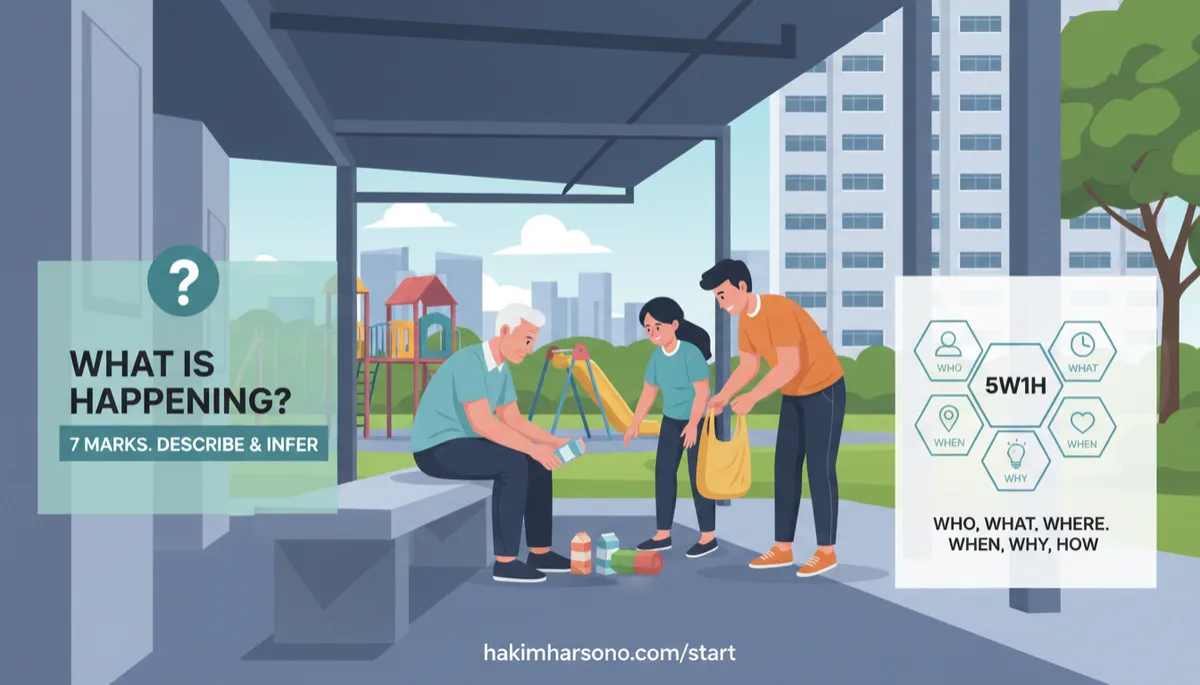
In the PSLE stimulus based conversation, Q1 usually sounds like this: “What is happening in this photograph? What do you think led to this?” It is worth 7 marks, so a strong start here sets the tone for the rest of the exam. Many students treat Q1 as a simple description task and only say what they see. That usually leads to a mid-band score.
AL1 students do two things: they describe clearly and they infer thoughtfully. In other words, they answer both parts of the question: “What is happening?” (description) and “What do you think led to this?” (inference — using clues to guess the backstory and feelings).
2. The 5W1H Method for PSLE Oral Q1 Photo Analysis
A simple way to train AL1 answers is to use the 5W1H PSLE oral Singapore framework: Who, What, Where, When, Why, How. Use it like a mental checklist each time your child looks at a picture.
- WHO – Identify all the people. Mention age (young boy, elderly lady), relationship (friends, family, strangers), facial expression (smiling, frowning) and body language (bent over, standing confidently, leaning away).
- WHAT – State the main action in specific terms. Not just “they are talking”, but “the girl is pointing at the poster while explaining something to her classmates”.
- WHERE – Identify the setting using Singapore contexts: HDB void deck, hawker centre, MRT station, school canteen, park, community centre. Use visual clues like pillars, signboards, uniforms and furniture.
- WHEN – Use clues to guess time: shadows, lighting, clothing and activities. Is it morning or afternoon? Weekday or weekend? Ordinary school day or special occasion like National Day celebration or Racial Harmony Day?
- WHY – This is the inference part. Ask, “What probably happened before this?” Use details to guess the reason behind the scene. This directly answers “What do you think led to this?” in stimulus based conversation Q1.
- HOW – Assess the emotional quality. How do the people feel, and what in the picture tells you that? Mention specific clues: clenched fists, relaxed shoulders, wide smiles, worried eyes.
3. Worked Example: Community Scene at an HDB Void Deck
Imagine a photograph of an elderly man being helped by two younger people at an HDB void deck. Let’s walk through the 5W1H method step by step with full sentences.
- WHO: “In the photograph, there is an elderly man in his seventies and two younger adults who look like they are in their twenties. The elderly man is sitting on a bench and looks a little tired, while the younger man is bending down and picking up some groceries from the floor. The young woman beside him is holding the elderly man’s arm gently.”
- WHAT: “They seem to be helping the elderly man gather his groceries and making sure he is all right.”
- WHERE: “This is taking place at an HDB void deck, as I can see the familiar pillars, tiled floor and letterboxes in the background.”
- WHEN: “The scene is likely happening in the late afternoon on a weekday because the lighting is bright but not harsh, and the younger adults are dressed casually, as if they have just come home from work or school.”
- WHY: “The elderly man is sitting on the bench with plastic bags scattered near his feet, so he probably dropped his groceries, and the two younger adults stopped to help him pick them up.”
- HOW: “The elderly man looks relieved because he is slightly smiling, while the younger adults seem concerned yet kind as they lean towards him and focus on helping him.”
2‑Star Answer vs 4‑Star Answer
2‑star answer (mostly description): “In the picture, I see an old man and two young people at the void deck. The old man is sitting on a bench and the young man is picking up things. The young woman is standing beside them. They are at a HDB block. That is all.”
4‑star answer (description + inference using 5W1H): “In the photograph, an elderly man is sitting on a bench at an HDB void deck, looking a little tired and worried. Two younger adults, who may be neighbours or his grandchildren, are helping him. The young man is bending down to pick up some groceries that have fallen onto the tiled floor, while the young woman is gently holding the elderly man’s arm to support him. From the bright natural light and the casual clothes they are wearing, this scene is probably taking place in the late afternoon after school or work. I think the elderly man might have slipped or lost his balance while carrying his groceries home, and the younger adults noticed and rushed over to help. They seem caring and considerate, and the elderly man looks relieved to receive their help.”
4. The Inference Rule: One Observation, One Inference
To strengthen PSLE oral Q1 photo analysis, use this simple rule at home: for every observation, add one inference. Train your child to pair them together in one sentence or in two linked sentences.
Example: “The elderly man is sitting on a bench [observation]. He looks like he may have dropped his groceries, and the younger man is picking them up [inference].” You can repeat this pattern for facial expressions, body language and setting clues.
5. Practice Exercises for Parents and P6 Students
Read each description aloud, then ask your child to answer using the 5W1H method and the observation–inference rule. You do not need the actual photo; the description is enough to practise stimulus based conversation Q1 thinking.
- Hawker centre scene: A stallholder is handing a bowl of noodles to a schoolboy in uniform. The boy is holding a tray with a drink and smiling. Several people are queuing behind him, and a signboard with prices is visible above the stall.
- MRT station scene: A teenage girl is offering her seat to a pregnant lady on a crowded train. An elderly man nearby is watching and smiling. There are safety posters on the walls and many commuters holding onto the grab poles.
- School park clean‑up: A group of pupils in PE attire are picking up litter in a neighbourhood park. One boy is using tongs to pick up a plastic bottle, while a girl is holding a rubbish bag open. A teacher is standing nearby, supervising and encouraging them.
6. Next Step: Get Structured Help for PSLE Oral Q1
With regular practice using the 5W1H PSLE oral Singapore method and the observation–inference rule, your child can turn Q1 from a guesswork question into a clear, confident response. If you would like step‑by‑step guidance, model answers and targeted feedback for PSLE oral Q1 photo analysis, visit hakimharsono.com/start to see how Speak Easy can support your child’s preparation.
