Improve PSLE Oral: 5 Effective Reading Aloud Tips
PSLE Oral, Reading Aloud, Singapore English
How to Improve Reading Aloud for PSLE Oral: 5 Techniques That Work
By Hakim Harsono, Speak Easy — A practical guide for Singapore parents and P6 students who want clear, confident PSLE Oral reading aloud, using simple techniques you can start at home today.
Why Reading Aloud Matters for PSLE Oral
Many P6 students can read the words on the page, but PSLE Oral is not just about correct reading. Examiners are listening for clarity, expression, and appropriate tone. The good news: you do not need natural talent. You need technique and practice.
Below are five proven methods I use with Speak Easy students. Each technique includes a simple home practice so parents know exactly how to help. Use them together and you will see real improvement in how to improve reading aloud PSLE oral within weeks, not months.
1. Mark the Passage During Prep (90 Seconds that Transform Delivery)
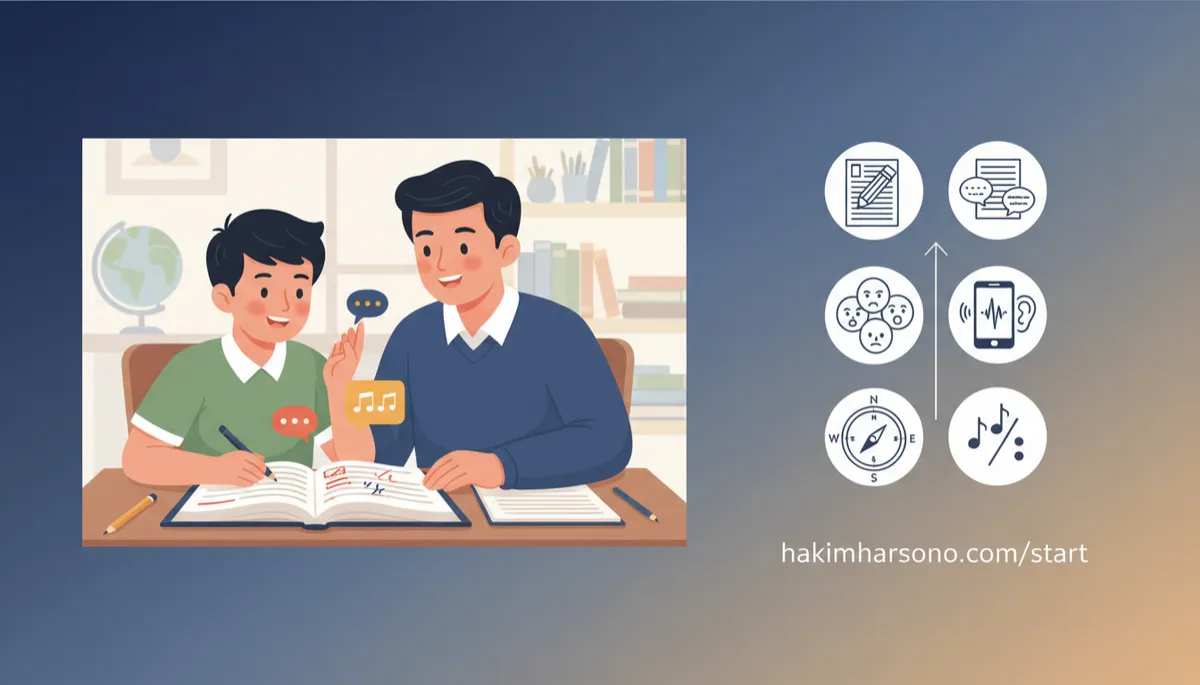
During the preparation time, most students silently read once and wait. That wastes a powerful chance to plan expression. Instead, train your child to mark the passage quickly with three things:
- Underline stress words: important nouns, verbs and adjectives that carry meaning (e.g. frightened, crashed, carefully).
- Mark pauses with a slash “/” at commas, full stops, and before longer phrases.
- Note the situation tone in the margin: “worried”, “excited”, “formal”, “sad”.
This takes about 90 seconds and turns a flat reading into a planned performance. The underlines tell the voice where to rise; the slashes remind the mouth to breathe; the margin note keeps the overall mood consistent.
2. The 3-Register Practice (Expand Vocal Range Fast)
Many Singaporean students use just one safe voice for everything. Examiners then hear a flat, careful, slightly nervous tone. The 3-register practice stretches that habit and makes expression feel natural, not awkward.
- Choose one paragraph from any text: textbook, storybook, or past-year PSLE oral reading aloud technique passage.
- Read it as if explaining to a 6-year-old — slower, warmer, bigger facial expression.
- Read it as if presenting to your school principal — respectful, clear, slightly formal.
- Read it as if reporting the news — steady, confident, neutral but clear emphasis.
After three rounds, your child will feel how their pitch, speed and energy can change. This flexibility is exactly what they need when the passage requires a particular mood in the exam.
3. Record Yourself: Close the “I Thought I Sounded Better” Gap
Most flat readers honestly believe they already have enough expression. When they finally hear a recording, they are shocked at how soft, fast or monotonous they actually sound. This gap between how you think you sound and how you really sound is where improvement lives.
Use any phone. Record one full reading aloud of a short passage. Then, listen back immediately and ask:
- Can I hear every word clearly?
- Do I sound interested, or bored?
- Where did I rush, mumble, or run through punctuation?
4. Decode PACT Before You Even Touch the Passage
Before reading a single word, spend 10 seconds on PACT:
- P – Purpose: Is this to inform, describe, persuade, or entertain?
- A – Audience: Who is listening in the story — friends, teacher, public?
- C – Context: What is happening? Is it a speech, diary, article, or story scene?
- T – Tone: Based on the above, should the voice be serious, cheerful, worried, or neutral?
Students who skip this step deliver the wrong register about 70% of the time. They read a serious speech like a story for children, or a heartfelt reflection like a news report. Ten seconds of PACT analysis changes the whole delivery and is a key PSLE oral reading aloud technique Singapore students can easily master.
5. The Pause-After-Punctuation Rule
Rushing through punctuation is one of the fastest ways to sound flat and unclear. Use this simple rule to train a calmer, more considered reading:
- Comma = 1 beat (quick pause)
- Full stop = 2 beats (slightly longer pause)
- New paragraph = 3 beats (reset breath and tone)
Count the beats silently in your head: “one” for a comma, “one-two” for a full stop. It will feel slow at first, but to the listener it sounds clear, confident and controlled.
Turn Techniques into a Weekly Routine
To truly see improvement in how to improve reading aloud PSLE oral, build a simple weekly plan: two days of marking passages and PACT, two days of 3-register practice, one recording session, and daily punctuation-pausing. Small, consistent practice beats last-minute drilling.
If you want structured guidance, model readings and proven drills for your child, visit hakimharsono.com/start to get started with Speak Easy support for PSLE Oral success.
