AL1 vs AL2: Key Differences in PSLE Oral
PSLE, Oral Exams, Singapore Parents
AL1 vs AL2 in PSLE Oral: The Exact Difference
By Hakim Harsono, Speak Easy — for Singapore parents who want a clear, honest picture of what separates AL1 from AL2 in PSLE Oral, without myths or guesswork.

The Biggest Misconception About AL1 vs AL2 PSLE Oral
Most parents quietly believe the same thing: to get AL1, their child must speak like a mini lawyer — fancy vocabulary, “chim” phrases, flawless grammar. That belief is precisely why many capable P6 students stay at AL2, even when they “sound good”.
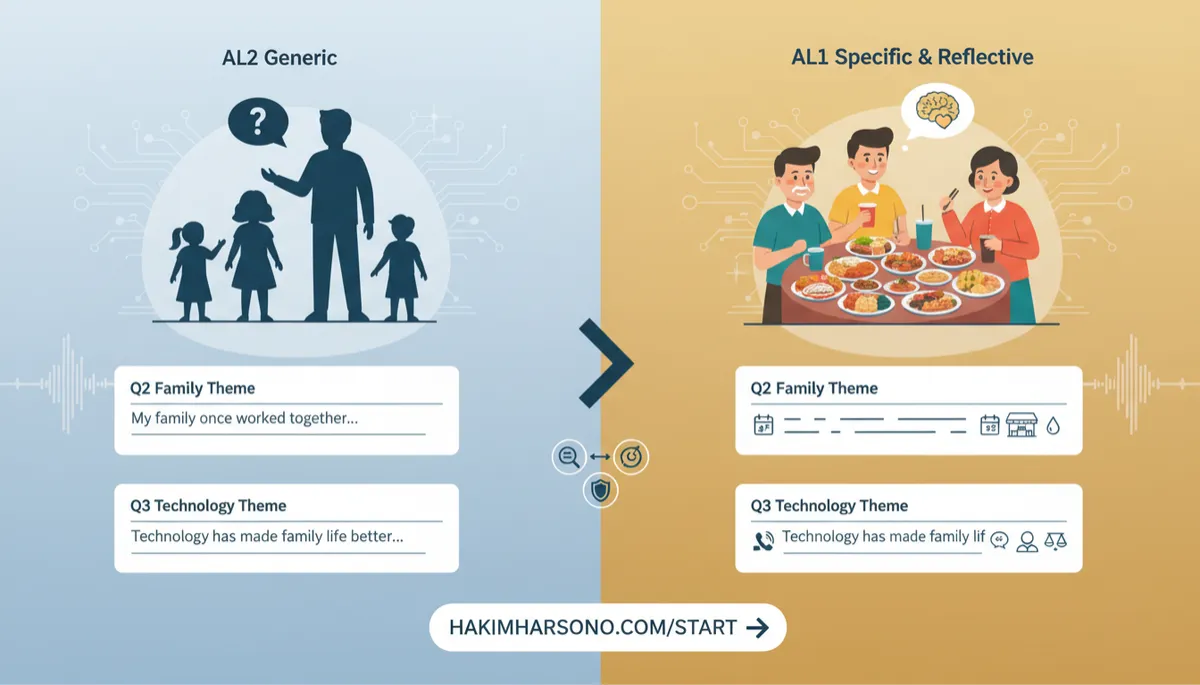
Examiners are not rewarding show-off English. They are listening for clarity, authenticity, and depth of thought. When you look closely at AL1 vs AL2 PSLE oral performances, the difference is not “better words”. It is more specific, more personal, and more reflective answers to Q2 and Q3.
What AL1 Answers Actually Do Differently
At Speak Easy, when we analyse scripts and live performances, the PSLE oral AL1 difference in Singapore always comes down to two things:
- Q2 (personal experience): AL1 answers give specific, genuine personal detail — names, places, feelings, small actions — and end with a reflective extension (what the experience taught them or revealed about their values).
- Q3 (opinion): AL1 answers take a clear position, support it with concrete reasons and a short personal example, then briefly reflect on the bigger idea behind the question.
AL2 answers are not “wrong”. They are usually correct, safe, and polite — but generic. Examiners hear them dozens of times a day. AL1 answers stand out because they sound like this child, not “every child”.
Side-by-Side: Q2 Family Theme (AL2 vs AL1)
Question: “Tell me about a time your family worked together for something important.”
Typical AL2 answer: “My family once worked together to plan a birthday party for my grandmother. We all helped out and it was very successful. I was happy that we could celebrate together.”
This is fine: clear, relevant, no grammar disaster. But it could be any child, any grandmother, any party. No concrete pictures, no deeper takeaway. That keeps it in AL2 territory.
AL1 answer: “Last year, my grandmother wanted to mark her 70th birthday quietly — just us and her favourite hawker food. My father, my uncle, and I spent three evenings finding the stalls she used to visit in the 1980s in Toa Payoh. On the day, she cried when she saw the spread. That experience taught me that the most meaningful celebrations are the ones where someone else's joy is more important than your own effort.”
Notice the shift. We get named detail (Toa Payoh, 1980s, hawker food, father and uncle), a specific moment (she cried when she saw the spread), and a reflective extension that clearly states what the child learned. That final sentence is what pushes the answer into AL1 for PSLE oral.
Side-by-Side: Q3 Technology Theme Using PEERS
Question: “Do you think technology has made family life better or worse?”
Typical AL2 answer: “I think technology has made family life better because it helps families communicate more easily.”
Again, correct but thin. One short reason, no example, no reflection. To move towards AL1, we teach a simple PEERS structure for Q3:
- Position – clear stand
- Explanation – why you think so
- Example – short, specific, personal story
- Reflection – what this shows about tech vs connection
- Summary – one-line wrap-up of your stand
AL1-style answer using PEERS: “I think technology has mostly made family life better. It helps us stay close even when we are busy. For example, my father travels to Johor weekly for work, but every night at 9 p.m., we have a short video call. We show him our dog doing silly tricks and he sometimes reads a quick story to my younger sister. This routine reminds me that technology is just a tool — it strengthens family life only when we use it to be present, not to escape from each other. Overall, I would say it improves family life when we use it with intention.”
Same topic, same vocabulary level, but far more thought. That is what examiners reward when deciding between AL1 vs AL2 PSLE oral bands.
Three Levers That Move a Child from AL2 to AL1
- 1. Specific named detail in Q2. Names, places, small actions, and emotions make the story believable. “My family” becomes “my father, my uncle and I in Toa Payoh”.
- 2. A reflective extension at the end. One sentence on what the child realised, not just what happened. This is the single biggest AL1 vs AL2 PSLE oral difference for personal questions.
- 3. A clear position in Q3 backed by evidence. No sitting on the fence. State a stand, justify it with at least one concrete example, then reflect briefly on the bigger idea.
When parents ask me how to get AL1 PSLE oral, I do not start with idioms or “good phrases”. I start with these three levers. Once a child can do them reliably, everything else is polishing.
Help Your Child Practise the Right Skills, Not Just “Good English”
If your P6 child is already speaking clearly but stuck at AL2, the problem is almost never “weak vocabulary”. It is usually generic content and shallow reflection. The good news: those can be trained in weeks, not years, once you know exactly what examiners are listening for.
If you want targeted, practical help for PSLE oral AL1 difference Singapore parents rarely see explained this clearly, start here: hakimharsono.com/start. I break down real scripts, show you model answers, and give your child simple frameworks like PEERS they can actually use under exam pressure.
